
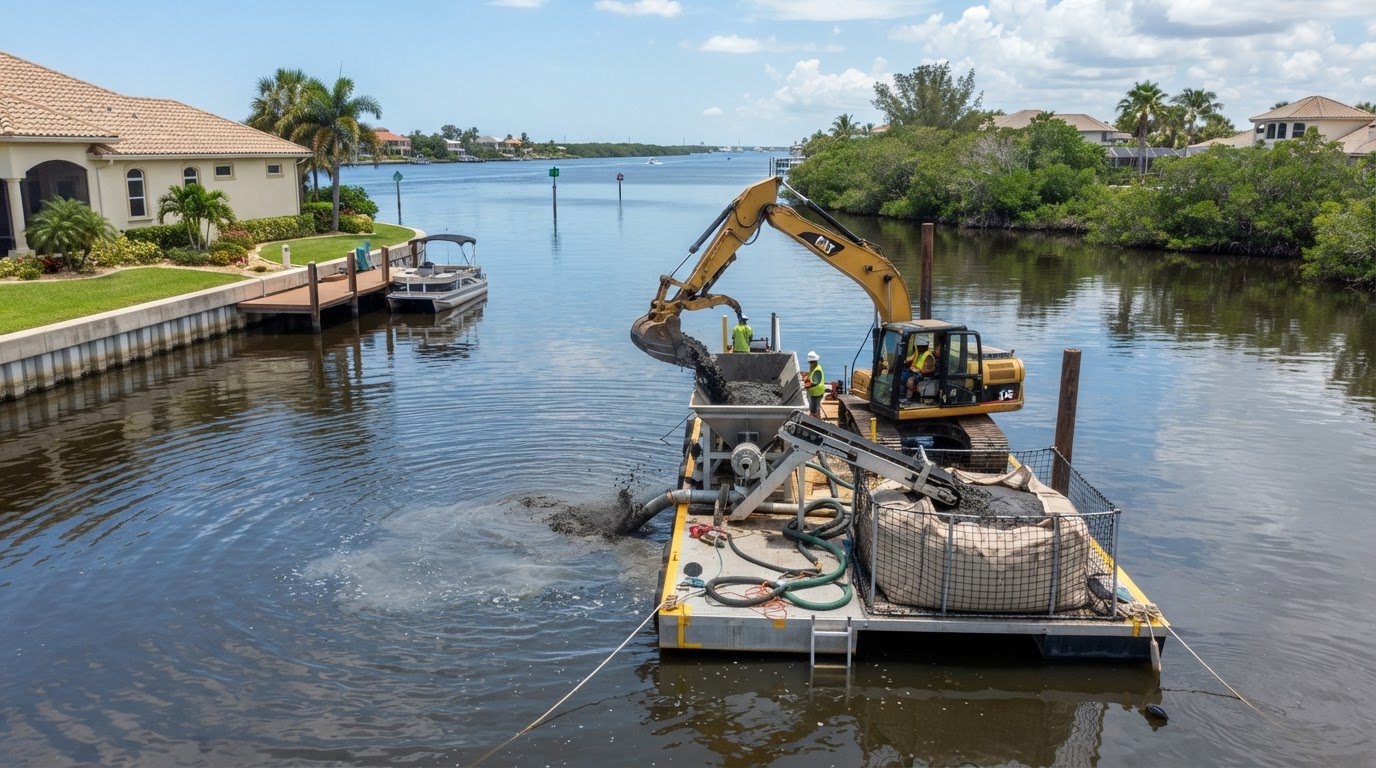
Residential Dredging Services Daytona Beach
Residential dredging removes accumulated sediment to improve or maintain water access at a private waterfront property. This page explains when dredging may be considered, the substantial environmental and permitting considerations involved, and why sediment removal is not automatically allowed or appropriate.
Request a Marine Construction Estimate
Share your dock, seawall, or boat lift project details and we'll review the requirements for your Daytona Beach area waterfront property.
Residential Dredging Services in Daytona Beach
Over time, sediment can accumulate along waterfront properties, reducing water depth and limiting vessel access. Some Daytona Beach area property owners investigate residential dredging to restore or improve access to a dock, canal, or waterway. Dredging is a significant activity with substantial environmental and permitting considerations, and it is not automatically permitted at every property.
This page provides general information about residential dredging. It does not suggest that dredging is authorized, appropriate, or available at every waterfront. Approval requirements depend on the waterbody, work scope, and applicable authorities, and project-specific determinations should be referred to the appropriate authority and qualified professionals.
- Waterway and dock access considerations
- Sediment accumulation and vessel draft
- Environmental review and habitat protections
- Permitting requirements by waterbody and scope
- Sediment handling and disposal considerations
- Residential versus commercial dredging distinction
When Residential Dredging May Be Considered
Residential dredging may be considered when sediment accumulation has reduced water depth enough to limit vessel access. A property owner investigating dredging typically wants to restore access to an existing dock, improve navigation to a channel, or address sediment that has built up over time. The project goal is usually tied to a specific vessel and its draft requirements.
Not every waterfront property can be dredged, and sediment removal is not authorized by default. The feasibility of dredging depends on the waterbody, the existing conditions, environmental sensitivity, and the applicable review. Investigating these factors before committing to a plan helps property owners set realistic expectations.
- Restoring access to an existing dock
- Improving navigation to a channel or waterway
- Addressing sediment accumulation over time
- Matching water depth to vessel draft
- Existing channel and waterway conditions
- Whether the waterbody permits dredging at all
Water Depth & Dock Access Near Daytona Beach
Vessel requirements, water depth, and access limitations are related. Dredging is one possible response, but not the only one.
- Vessel draft and the depth required to float and maneuver
- Existing water depth at the dock and access route
- Tidal or seasonal water-level variation
- Whether depth limitations are sediment-related or natural
- Whether dock modifications or vessel changes could address access
- Relationship between depth, access, and intended vessel use
Residential Dredging Methods & Planning
Only high-level descriptions of potential approaches are appropriate here. Specific excavation depths, equipment, and removal quantities depend on the site and approved scope.
- Mechanical or hydraulic approaches depending on conditions
- Site access for equipment and material handling
- Coordination with existing docks and shoreline structures
- Sediment volume and characteristics
- Work windows related to environmental protections
- Approved scope determined by the reviewing authority
Sediment Handling & Disposal Considerations
Sediment characteristics, testing, and disposal may affect project planning where applicable.
- Sediment composition and characteristics
- Testing requirements where applicable
- Approved disposal or reuse options
- Upland or offsite disposal logistics
- Transport and handling considerations
- Compliance with disposal requirements
Environmental Review for Residential Dredging
Dredging can affect aquatic environments, so site-specific environmental review is typically required. These concerns vary by location.
Aquatic Vegetation
Submerged or emergent vegetation at the site may be affected by dredging and can influence what work is permitted.
Marine Habitat
Marine habitat and water quality can be affected by sediment disturbance, influencing review and timing requirements.
Wildlife Protections
Wildlife protections, including seasonal work windows, may restrict when and how dredging can occur at a site.
Residential Dredging Permits Near Daytona Beach
Approval requirements depend on the waterbody, work scope, and applicable authorities. Exemptions and timelines are not guaranteed.
- Florida environmental review for aquatic impacts
- Federal review through the Army Corps where applicable
- Sovereign submerged lands considerations
- Municipal and county requirements where relevant
- Site-specific conditions affecting review
- No guaranteed exemptions or approval timelines
Dredging vs. Dock Modifications
Adjusting dock access or vessel selection may be a different path than removing sediment. The right approach depends on the cause of the access limitation.
Dredging
- Removes accumulated sediment to increase depth
- Addresses sediment-related access limitations
- Involves substantial environmental review
- Permitting and disposal considerations apply
Dock or Vessel Changes
- Adjusts dock configuration or gangway
- May involve a different vessel or lift
- Different review considerations than dredging
- May be practical where depth is naturally limited
Residential vs. Commercial Dredging
Residential dredging inquiries involve private waterfront access and are distinct from larger commercial dredging operations. The scope, equipment, and review considerations differ. This page addresses private waterfront inquiries only; commercial dredging involves its own set of requirements and is addressed separately.
Related Services Near Daytona Beach
Explore other marine construction topics relevant to your waterfront project.