
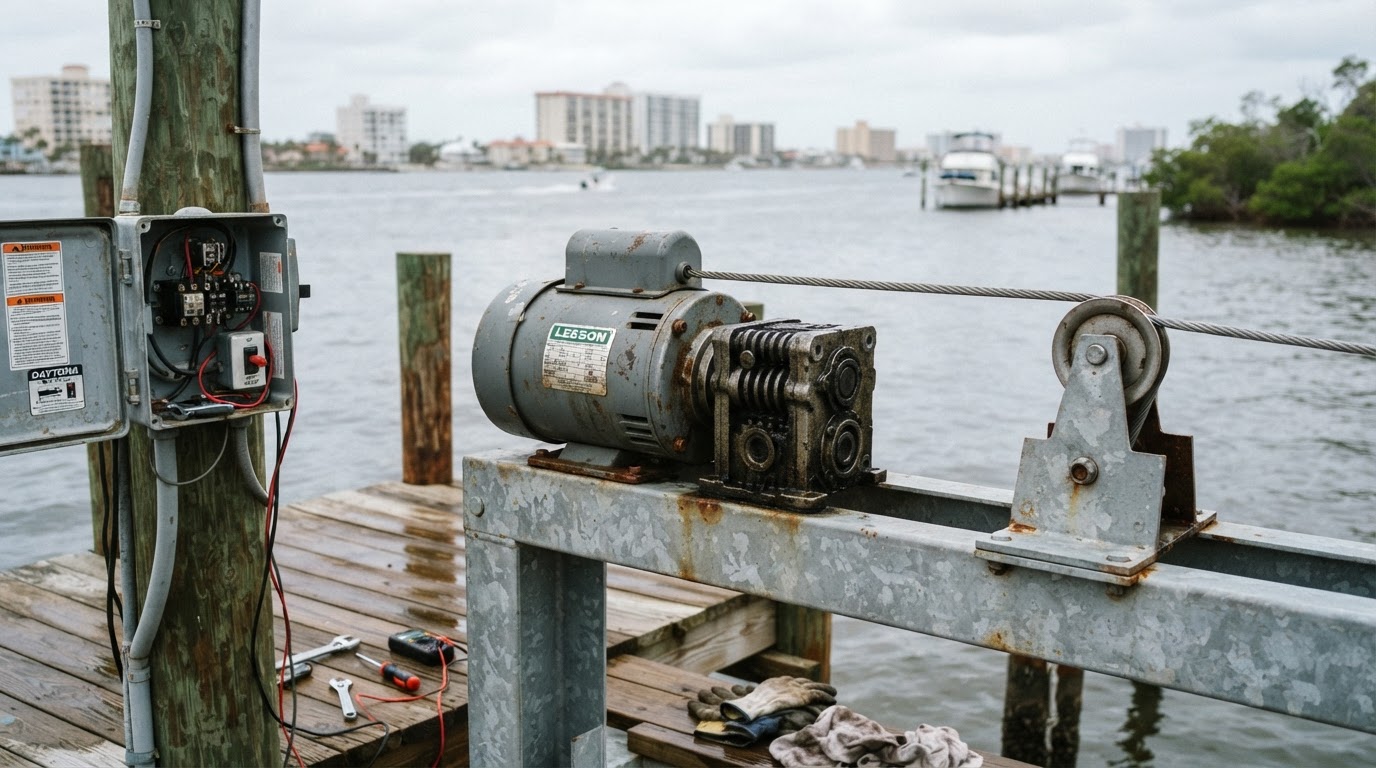
Boat Lift Maintenance & Repair Guide Daytona Beach
Boat lift maintenance depends on the lift system, manufacturer, model, installation, waterbody, and the vessel it carries — not on a single fixed schedule. This guide explains what to observe on a boat lift in Daytona Beach, why manufacturer instructions take precedence over generic advice, and which warning signs call for qualified service — without providing instructions for handling tensioned cables, motors, or suspended vessels.
Request a Marine Construction Estimate
Share your dock, seawall, or boat lift project details and we'll review the requirements for your Daytona Beach area waterfront property.
Boat Lift Maintenance in Daytona Beach
A boat lift holds a vessel above the water, which means its cables, straps, motors, and structural components carry real loads under tension. Maintenance for these systems is not the same as maintaining a dock. The manufacturer's documentation for the specific lift model is the authoritative source for service intervals, lubrication points, and replacement guidance — and this page does not substitute for it.
This guide describes general observation practices and warning signs. It does not provide step-by-step instructions for handling tensioned cables, electrical systems, motors, or suspended vessels, and it does not publish a universal weight capacity or maintenance interval. Where a concern involves cables, motors, or electrical components, a qualified technician should perform the work.
- Components that commonly need attention
- Motor, cable, and hardware warning signs
- Why manufacturer documentation governs service
- Electrical safety on waterfront lifts
- Saltwater versus freshwater exposure
- Repair versus replacement considerations
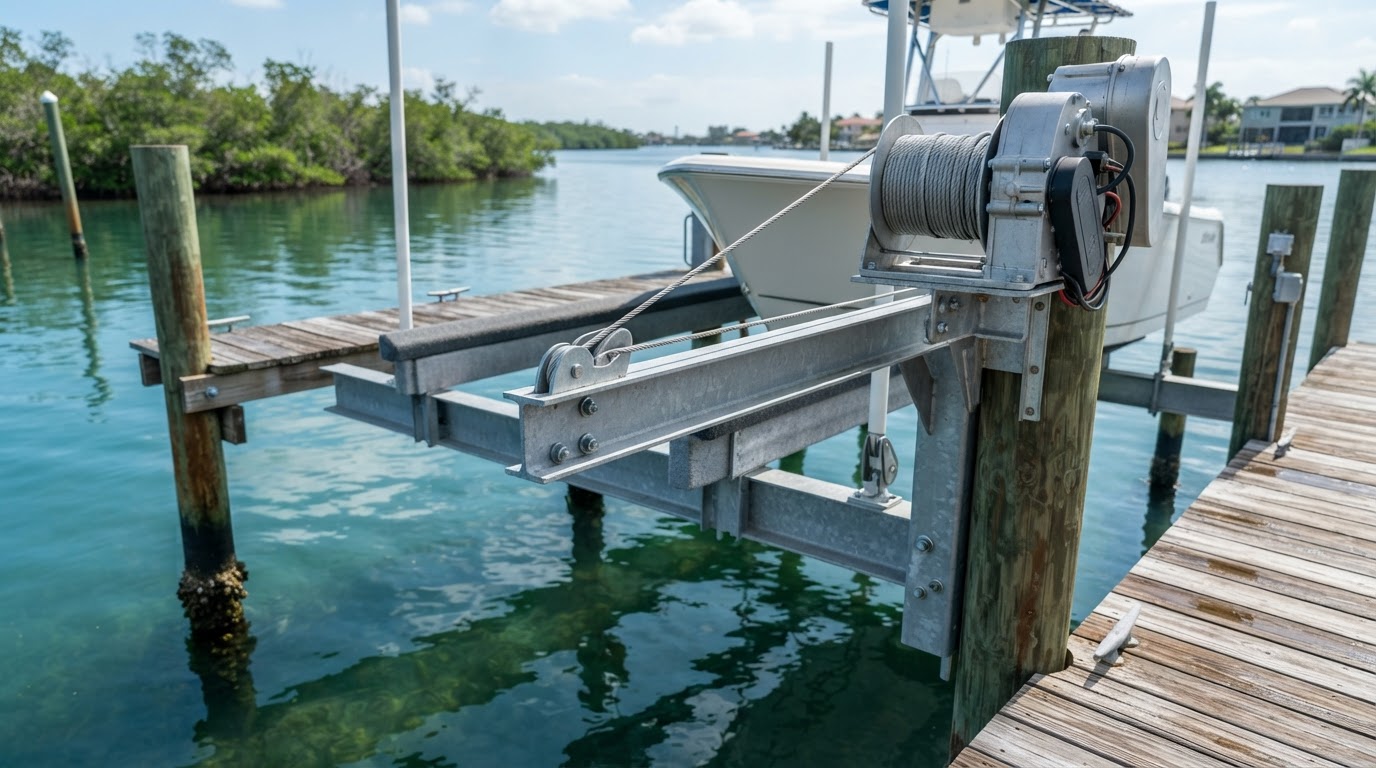
Common Boat Lift Components That Need Attention
A typical boat lift includes a structural frame or cradle, lifting cables or straps, a motor and gear assembly, pulleys, controls, and electrical connections. Each of these components wears differently depending on the system, the vessel, and the waterbody. Routine observation means noting the visible condition of these parts without attempting to adjust or disassemble them.
Because loads are carried under tension, a worn cable or a failing motor is not simply a maintenance item — it is a safety concern. The appropriate response to a visible problem with a loaded component is to stop using the lift and arrange qualified service, not to attempt an adjustment while the system is under load.
- Cables, straps, pulleys, and the cradle carry the vessel's weight
- Motors and gears drive the lift and wear with use
- Controls and electrical connections operate in a marine environment
- Loaded components under tension are safety concerns, not routine items
Recognizing Motor, Cable and Hardware Concerns
Certain visible and audible signs indicate that a lift needs qualified service rather than continued use.
Unusual Noise
Grinding, straining, or unusual sounds from the motor or gear assembly can indicate wear or a developing problem. Stop using the lift and arrange qualified service.
Cable or Strap Wear
Fraying, kinking, corrosion, or broken strands in a cable, and cuts or UV deterioration in a strap, are reasons to stop using the lift. Do not attempt to repair a tensioned cable.
Uneven Movement
A lift that raises unevenly, hesitates, or drifts may have a mechanical, cable, or structural issue. Uneven movement under load is a safety concern.
Corrosion
Corrosion on fasteners, pulleys, or the frame is common on saltwater lifts. Visible corrosion on loaded components warrants professional evaluation.
Electrical Signs
Tripping breakers, burning smells, or corroded connections are electrical warning signs. Disconnect power if safe and arrange qualified electrical service.
Out of Documentation
If the lift's manufacturer documentation is missing, obtaining it is the first step. Service intervals and procedures are model-specific, not universal.
Manufacturer Maintenance Recommendations
Boat lifts are engineered products, and the manufacturer's documentation for the specific model is the authoritative source for maintenance intervals, lubrication, cable replacement guidance, and capacity ratings. This page does not publish a universal maintenance interval because there is no single interval that applies to every lift system, motor type, or waterbody.
If the original documentation is unavailable, contacting the manufacturer or a qualified technician familiar with the system is the practical next step. Generic advice cannot substitute for model-specific service requirements, and this page does not imply that all lift systems use identical procedures.
- Manufacturer documentation governs service intervals and procedures
- Cable replacement guidance is model-specific, not universal
- Missing documentation should be obtained before service
- Generic advice cannot substitute for model-specific requirements
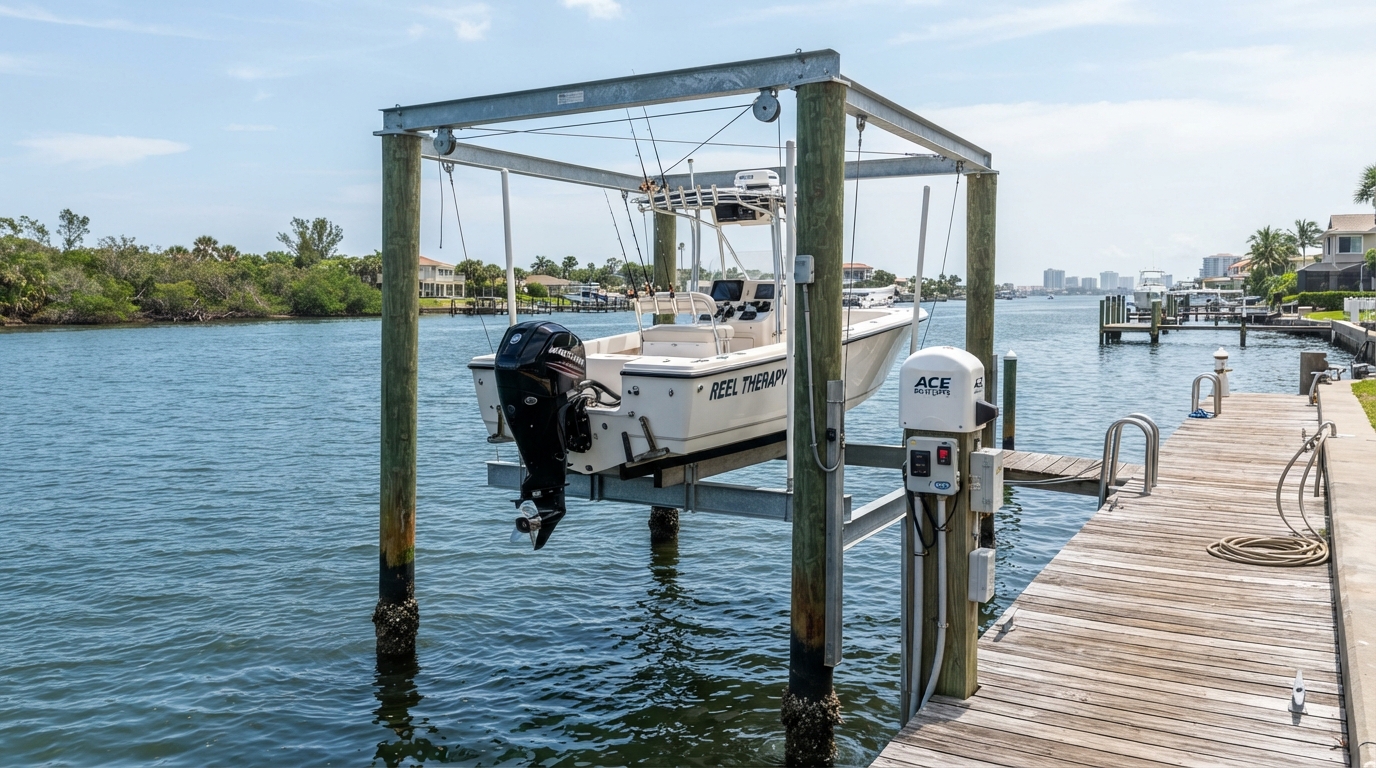
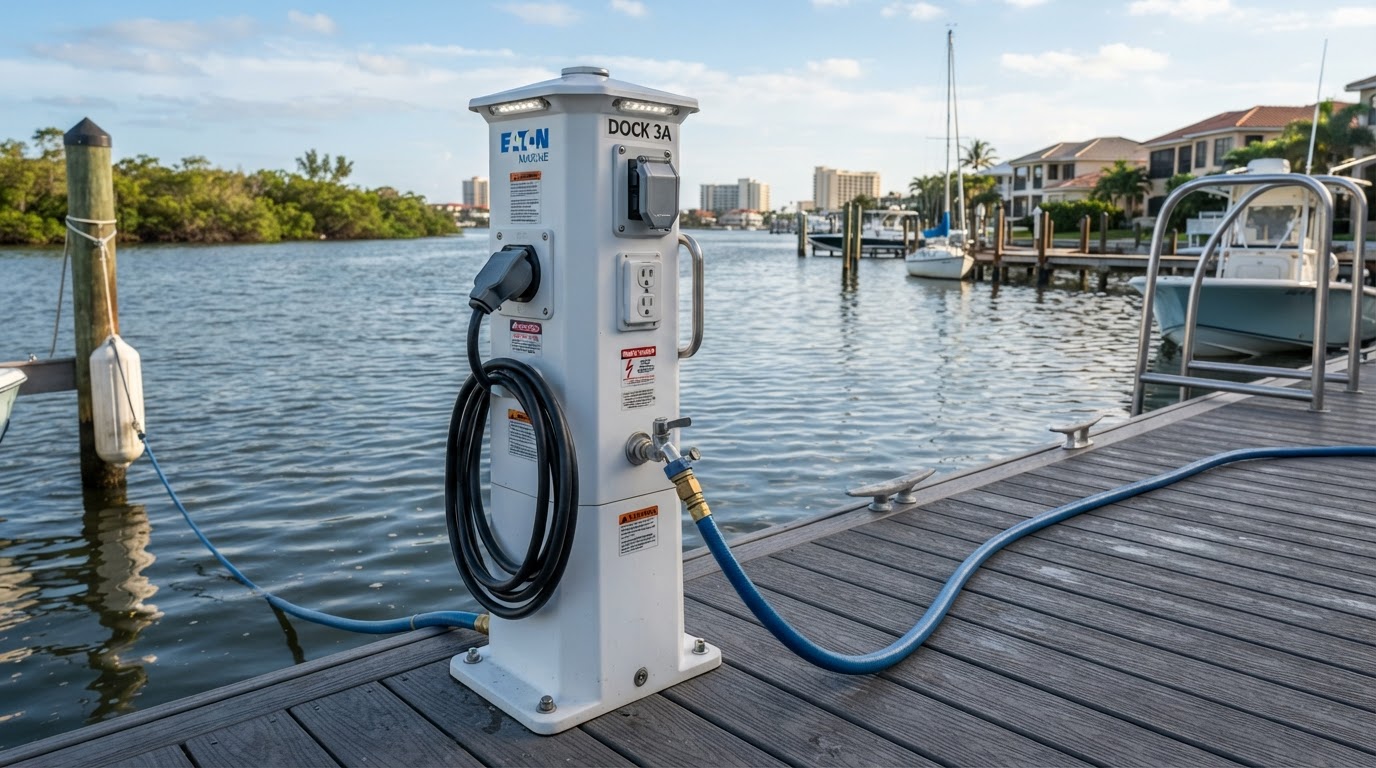
Electrical Safety Near Daytona Beach Waterfronts
Boat lift motors and controls operate in a marine environment where water and electricity are in close proximity. Tripping breakers, a burning smell, corroded connections, or damaged conduit are electrical warning signs that call for qualified service — not continued use. This page does not provide electrical repair instructions and does not recommend operating a lift with any sign of electrical damage.
If an electrical concern is observed and it is safe to do so, disconnect power at the source and arrange for a qualified professional to inspect the system before using the lift again. Dock and lift electrical work is not a do-it-yourself task.
- Tripping breakers or burning smells are electrical warning signs
- Corroded connections and damaged conduit call for qualified service
- Disconnect power at the source if safe before inspection
- Dock and lift electrical work is not a do-it-yourself task
Saltwater and Freshwater Exposure Considerations
Exposure environment affects how a lift wears, but it does not change the need to follow manufacturer guidance.
Saltwater Sites
- Corrosion of cables, fasteners, and hardware is accelerated
- Electrical connections face harsher exposure
- More frequent observation of loaded components is typical
- Manufacturer guidance for marine use still governs service
Freshwater Sites
- Corrosion is generally slower but not absent
- Cables and straps still wear with use and age
- UV and moisture exposure still affect components
- Manufacturer guidance still governs service intervals
Boat Lift Repair Versus Replacement
Whether a lift can be repaired or should be replaced depends on the system, the condition of its major components, the availability of parts, and whether the lift still suits the vessel it carries. A worn cable or a motor issue may be serviceable, while a corroded frame or a system that no longer matches the vessel may point toward replacement. This page does not publish a universal weight capacity and does not guarantee that any particular lift can be repaired. A qualified technician can determine the appropriate path for a specific lift based on its condition and the manufacturer's documentation.
Related Services Near Daytona Beach
Explore other marine construction topics relevant to your waterfront project.