
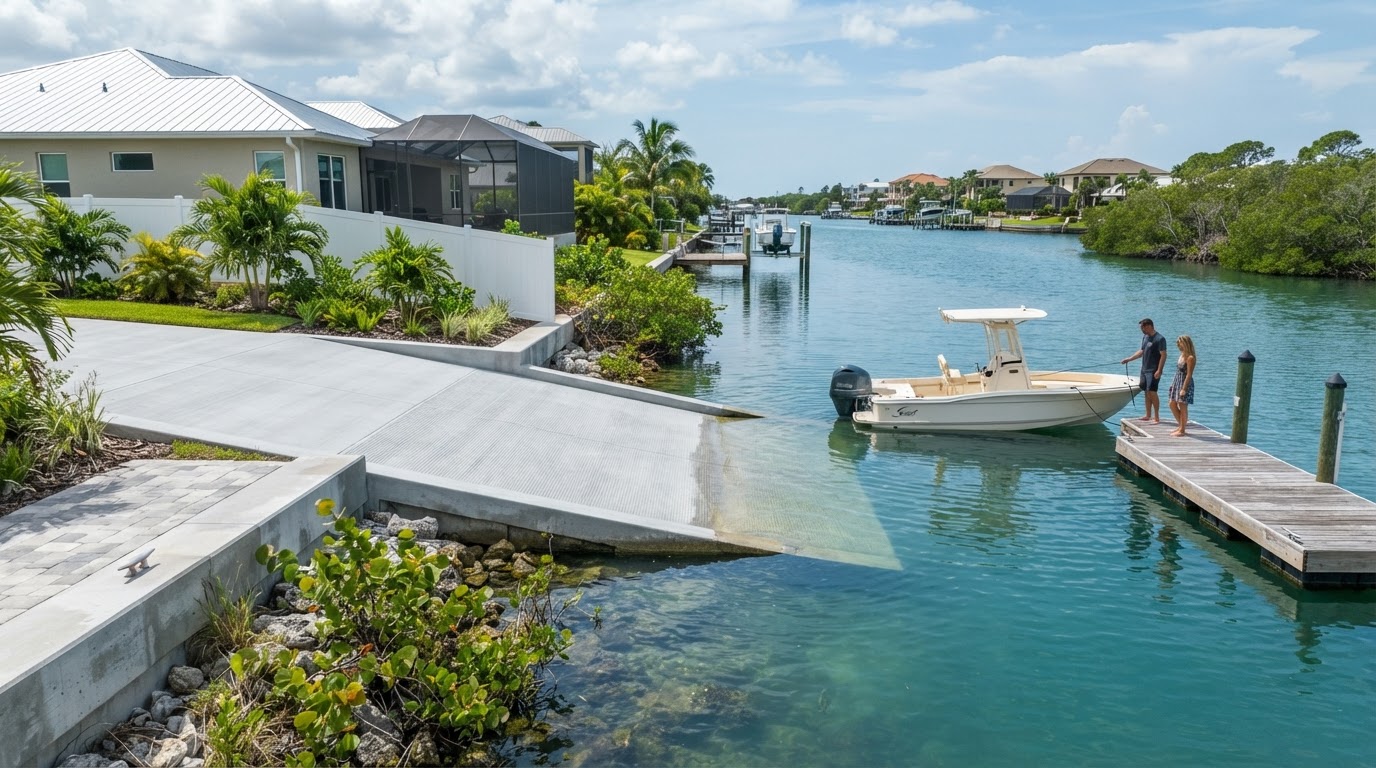
Boat Ramp Construction & Installation Daytona Beach
A boat ramp is a launching surface that allows trailers to load and launch vessels from a waterfront property. This page explains residential boat ramp construction, the materials and design considerations involved, and why ramp projects require site-specific evaluation and review.
Request a Marine Construction Estimate
Share your dock, seawall, or boat lift project details and we'll review the requirements for your Daytona Beach area waterfront property.
Boat Ramp Construction & Installation in Daytona Beach
A boat ramp provides a sloped surface extending from the shoreline into the water so a trailer can launch and retrieve a vessel. Along Daytona Beach area waterways, some private waterfront property owners investigate residential boat ramp construction where shoreline conditions, water depth, and property access make a ramp practical and permitted.
Boat ramp construction involves a foundation, surface material, shoreline integration, and trailer access. Not every shoreline can accommodate a ramp, and construction may require site-specific approvals. This page provides general information about boat ramp projects and the considerations that shape them.
- Concrete and surface material considerations
- Foundation support and shoreline conditions
- Trailer access and property layout
- Water depth and water-level changes
- Environmental and permit considerations
- Repair and replacement of existing ramps
Residential Boat Ramp Construction Near Daytona Beach
A residential boat ramp gives a waterfront property owner a private launching point for a trailerable vessel. The ramp extends from the shoreline into the water at a slope that allows a trailer to back down and launch or retrieve a boat. Whether a ramp is practical depends on shoreline geometry, water depth, property access, and applicable review.
Not every shoreline is suitable for a ramp. Shallow water, steep banks, soft shoreline conditions, or environmental sensitivity can make a ramp impractical or impermissible. A site-specific evaluation helps determine whether a ramp is appropriate before committing to a design.
- Private launching access for trailerable vessels
- Sloped surface from shoreline into the water
- Depends on shoreline geometry and water depth
- Requires suitable property and trailer access
- Subject to site-specific environmental review
- Not suitable for every waterfront property
Boat Ramp Materials & Construction
Ramp materials are selected for water exposure, foundation support, and maintenance. No universal thickness, slope, or reinforcement specification applies.
Concrete Surfaces
Concrete is commonly considered for ramp surfaces due to its durability in water, with foundation support designed for the site's shoreline and soil conditions.
Surface Materials
Other appropriate surface materials may be considered depending on the site, intended use, and exposure, each with different maintenance characteristics.
Foundation Support
Foundation support must address shoreline conditions, soil, water exposure, and the loads of a trailer and vessel during launch and retrieval.
Boat Ramp Design & Waterfront Access
Ramp design depends on trailer access, water depth, shoreline geometry, and water-level changes. No universal slope applies.
- Trailer and vehicle access to the ramp
- Water depth at the end of the ramp
- Shoreline geometry and bank conditions
- Tidal or seasonal water-level changes
- Property layout and turnaround space
- Potential erosion concerns at the shoreline
Boat Ramps vs. Dock Access Gangways
A boat ramp launches vessels from a trailer; a gangway provides pedestrian access to a dock. The two serve different functions.
Boat Ramp
- Sloped surface for trailer launch and retrieval
- Designed for vehicle and trailer access
- Involves shoreline and water-depth considerations
- Distinct environmental review considerations
Dock Gangway
- Pedestrian walkway connecting shore to a dock
- Designed for foot traffic, not trailers
- Accommodates water-level changes
- Different structural and access requirements
Boat Ramp Repair & Replacement
Existing ramps may deteriorate over time. Settlement, surface damage, and shoreline changes may require professional evaluation.
- Surface cracking, spalling, or deterioration
- Settlement or undermining of the foundation
- Shoreline erosion affecting the ramp
- Water-level or depth changes over time
- Whether repair or replacement is appropriate
- Qualified evaluation of structural concerns
Environmental & Permit Considerations
Boat ramp construction may require site-specific approvals. Not every shoreline can accommodate a ramp.
- Shoreline and waterbody conditions affect review
- Environmental sensitivity may restrict construction
- Municipal, county, and state review may apply
- Federal review for certain waterways where applicable
- No guarantee that a ramp is permitted at a site
- Project-specific determinations referred to authorities
Planning Boat Ramp Projects Near Daytona Beach
Useful project information includes the shoreline type, water depth, intended vessel, trailer and vehicle access, property layout, and existing conditions. A site-specific evaluation helps determine whether a ramp is practical and what review may apply before construction decisions are made.
Related Services Near Daytona Beach
Explore other marine construction topics relevant to your waterfront project.